Why Your Headphones Are Slowly Damaging Your Hearing
Over 1 billion young people are at risk of hearing loss from unsafe listening. Learn why modern headphones are more dangerous than ever — and what you can do about it.
SoundAlert Team
SoundAlert
The Silent Epidemic
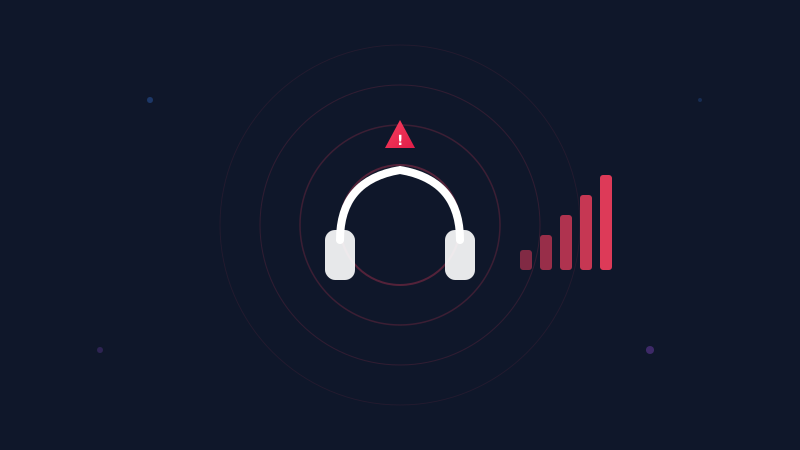
The World Health Organization estimates that over 1 billion young people aged 12-35 are at risk of hearing loss due to prolonged exposure to loud sounds through personal audio devices. That's not a typo — one billion.
The problem? Hearing damage is gradual and painless. By the time you notice it, significant harm has already been done.
Why Modern Headphones Are More Dangerous
1. Better Isolation = Higher Volume
Modern earbuds and noise-canceling headphones block outside sound so effectively that we lose our natural reference point for "how loud is too loud." Without background noise to compare against, we unconsciously crank the volume higher.
2. Longer Listening Sessions
We use headphones for everything now — music, podcasts, video calls, gaming, watching videos. The average person spends 4-6 hours daily with headphones on. Even moderate volume becomes dangerous over extended periods.
3. The 85 dB Rule
Sound above 85 decibels can cause permanent hearing damage with prolonged exposure. For reference:
- •Normal conversation: 60 dB
- •Busy traffic: 70-85 dB
- •Most people's headphone volume: 85-110 dB
- •A rock concert: 110-120 dB
At 85 dB, damage begins after about 8 hours. At 100 dB, damage can occur in just 15 minutes.
Warning Signs You're Listening Too Loud
- •Ringing or buzzing in your ears after removing headphones (tinnitus)
- •Sounds seem muffled after a listening session
- •You need to raise the volume to hear clearly
- •People near you can hear your headphone audio
- •You can't hear someone talking to you from arm's length
What You Can Do
Follow the 60/60 Rule
Listen at no more than 60% volume for no more than 60 minutes at a time, then take a break.
Use Volume Limiting Software
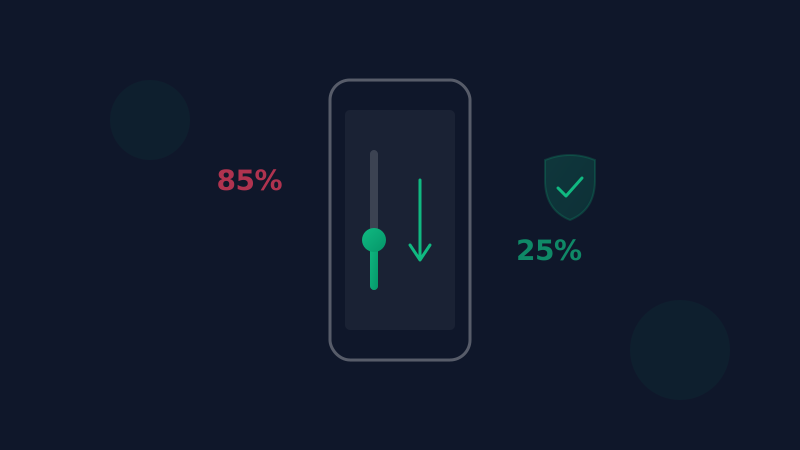
Apps like SoundAlert automatically monitor and reduce your volume when it exceeds safe levels. You don't have to think about it — the app handles it silently in the background.
Choose Over-Ear Headphones
Over-ear headphones generally require lower volume levels than in-ear buds to achieve the same perceived loudness.
Get Regular Hearing Checks
If you're a heavy headphone user, get your hearing tested annually. Early detection of hearing loss can prevent further damage.
The Bottom Line
Your hearing is irreplaceable. Unlike many other health issues, hearing damage cannot be reversed. The hair cells in your inner ear that convert sound into electrical signals don't regenerate once damaged.
The good news? Prevention is simple. Use volume protection, take breaks, and let technology help you stay safe. That's exactly what SoundAlert was built for.
Ready to Protect Your Hearing?
Download SoundAlert for free and start protecting your ears today.
Download Free